The Authentic Savoyard Tartiflette Recipe
The finest produce of the Savoie highlands.
Discover the secret behind the authentic tartiflette with Reblochon de Savoie AOP.

The finest produce of the Savoie highlands.
Discover the secret behind the authentic tartiflette with Reblochon de Savoie AOP.
Maxi-fête, inventor of the giant mobile pan since 1994, shares the original tartiflette recipe.
Protected Know-How & Innovation
Patent N° 94 16001, granted on 28/02/97 by the Institut National de la Propriété Industrielle (INPI) to SARL MAXI-FÊTE
Tartiflette is often perceived as an age-old dish born in medieval mountain chalets. In reality, its story is a fascinating lesson in regional marketing. It derives from the Péla, a dish of potatoes, onions and Reblochon cooked in a long-handled pan.
In the early 1980s, the Syndicat Interprofessionnel du Reblochon popularised the name "Tartiflette" (from the Savoyard dialect word tartifla, meaning potato) to boost sales of the famous Aravis cheese. This stroke of marketing genius transformed a peasant meal into a global icon of winter gastronomy.
Today, an authentic tartiflette depends on the quality of its local produce: Reblochon de Savoie AOP, firm-fleshed potatoes and smoked lardons.
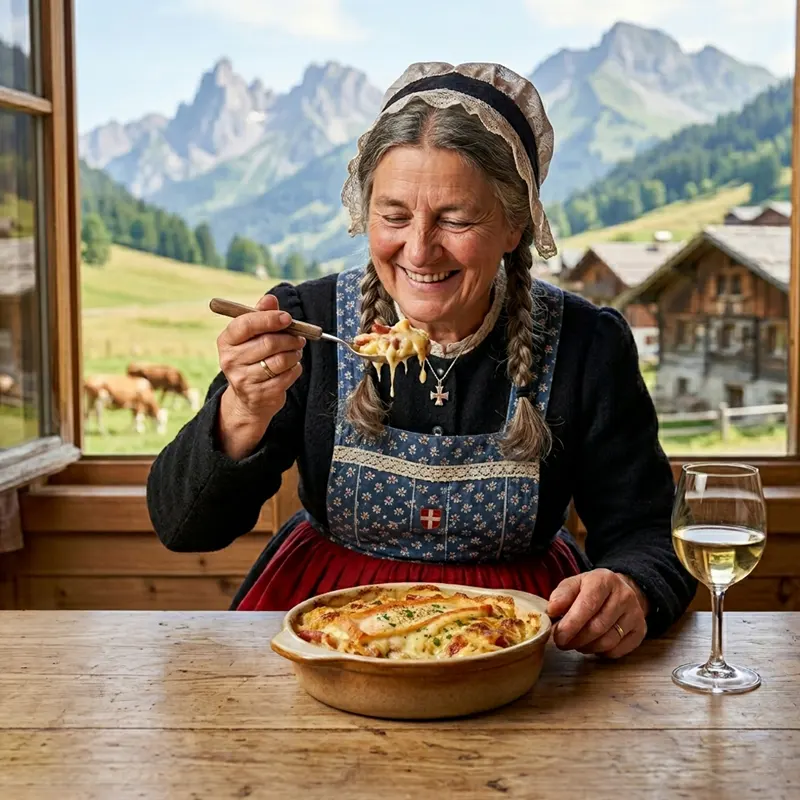
To make a tartiflette worthy of the finest tables in La Clusaz, achieving the right balance of textures is everything. The potatoes must not fall apart, the cheese must coat without burning, and the onions must be perfectly caramelised.
The key tip: Use a farmhouse Reblochon (green label), whose paste is softer and whose flavour is more intensely nutty. Contrary to popular belief, the Reblochon should not simply be placed on top: it must be cut in half and placed rind-side up so that the melting centre slowly infuses down through the potato layers.
Deglazing with dry Savoie white wine (Apremont or Jacquère) is the crucial step that brings the necessary acidity to balance the richness of the cream and cheese.
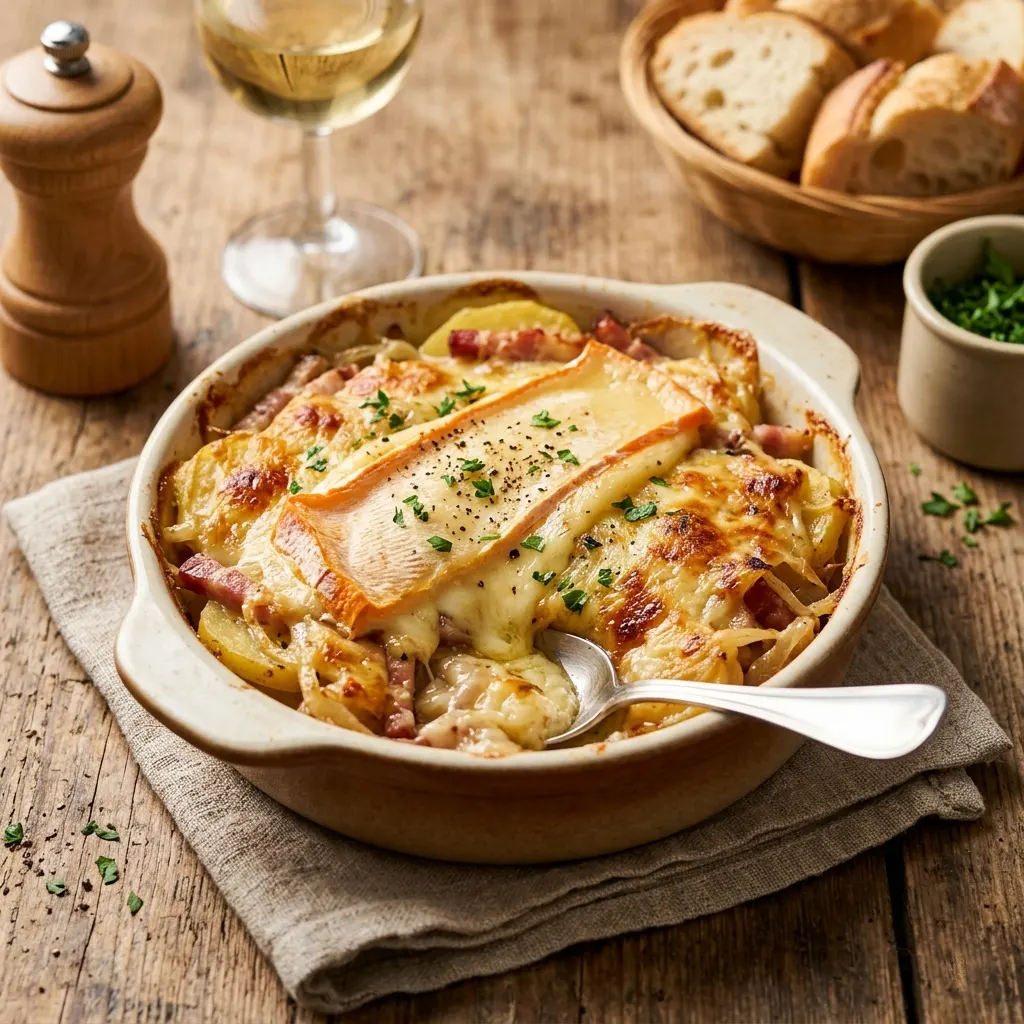
 1.2 kg potatoes
 1 Reblochon de Savoie AOP
 250 g smoked lardons
 2 large white onions
 100 ml crème fraîche
 Dry Savoie white wine
Follow this guide to transform quality local produce into a masterpiece of Savoyard gastronomy.
Place your potatoes in a large pot of salted boiling water. The aim is tender flesh that still holds its shape. Once slightly cooled, peel them and slice into generous rounds to ensure a satisfying bite.
Gently cook the sliced onions and lardons together in a hot pan. Once golden, deglaze with a splash of dry Savoie white wine. This step is key: it lifts the caramelised juices and adds a noble touch of acidity to the dish.
Layer the dish: a base of potato rounds, the onion and lardon mixture, then the remaining potatoes. Spoon the crème fraîche delicately over the top to bind the flavours without drowning the ingredients.
Slice your Reblochon AOP in half through its thickness. Lay both halves on top of the dish, rind-side up. As it melts, the cheese will slowly infuse downwards through the layers to the very bottom of the dish.
Rub the dish with a garlic clove, then bake at 200°C for approximately 20 minutes. The cheese should be bubbling and the top a deep amber colour. If you prefer extra crunch, place under the grill for 2 minutes at the end — but stay watchful: Reblochon does not wait!
To complement the generous, rich character of tartiflette, a dry white wine from Savoie is essential. Its natural acidity cuts through the fattiness of the Reblochon while enhancing the cheese's hazelnut aromas.
Our selection for a perfect pairing:
Sommelier's tip: Serve these wines between 10°C and 12°C to preserve the delicate mountain character of their aromas.

It was in the heart of the Thônes valley, in the Aravis massif, that Reblochon forged its legend in the 13th century. At the time, the local Alpine farmers had to show considerable ingenuity to deal with the milk taxes imposed by the landowners.
The secret of "Re-blochage": To reduce their dues, the farmers of Thônes would deliberately perform an incomplete milking in front of the tax collectors. Once the inspectors had left, they carried out a second, clandestine milking. This "re-blochage" milk — extraordinarily creamy and flavoursome — was immediately turned into the small, unctuous cheese we know today.
This jewel of the Aravis now benefits from a Protected Designation of Origin (PDO). Whether farmhouse or dairy, Reblochon de Thônes requires meticulous ageing on spruce boards to develop its characteristic saffron-coloured rind and essential hazelnut flavour.
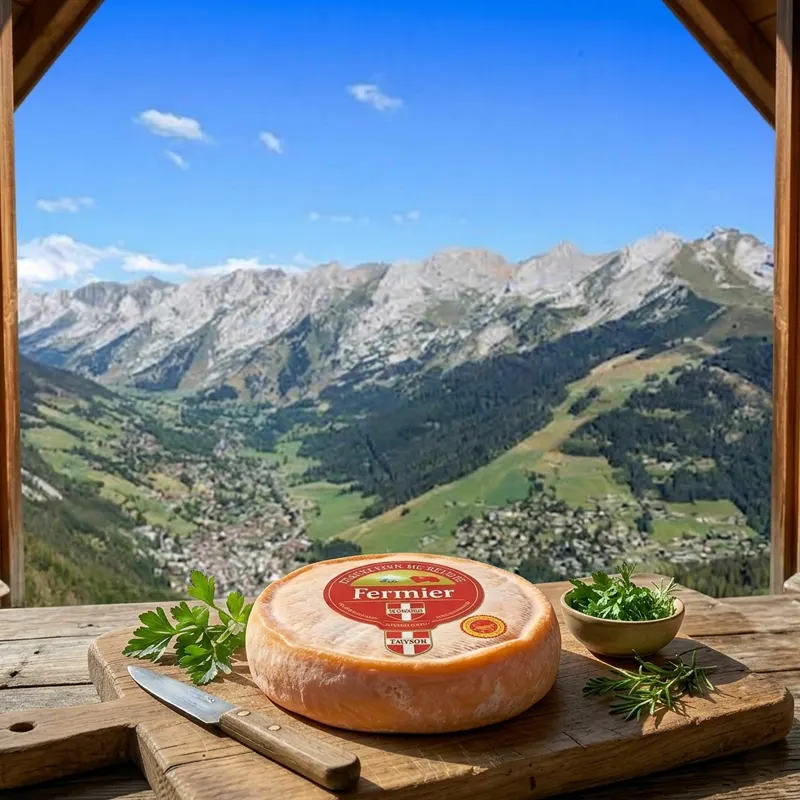
The one and only authorised cheese is Reblochon de Savoie AOP. Choose a farmhouse Reblochon (green label) over a dairy Reblochon (red label) for superior aromatic depth and a creamier texture after baking.
The best option is to buy directly from a fruitière cooperative (such as in Thônes or La Clusaz) or from a specialist cheesemonger. Look for the AOP logo and check that the cheese gives slightly when pressed — a sign of perfect ripeness.
It can be frozen, but the potato texture may turn mealy. The trick is to freeze it before the final baking stage, then bake it straight from frozen until golden and bubbling.
Absolutely not! The Reblochon rind is entirely edible and holds much of the cheese's aroma. As it melts, it gives the dish its characteristic hazelnut flavour and beautiful golden colour.
Choose firm-fleshed varieties such as Charlotte, Amandine or Chérie. They hold their shape during cooking and do not turn to mush under the weight of the melted cheese.
In the original "Péla" version there is no cream. However, modern tartiflette often uses a little to enhance the creaminess. It is a matter of personal taste — just do not overdo it!
It is even better the next day! Reheat it gently in the oven at around 150°C (130°C fan / Gas 2) to avoid burning the cheese and to preserve all the softness of the ingredients.
For the best result, preheat your oven to 200°C (180°C fan / Gas 6) and bake for approximately 20 minutes, until the cheese is perfectly melted and the top is well gratinéed without drying out the inside.
Green salad is the essential accompaniment: its freshness and crunch contrast perfectly with the richness of the cheesy potatoes. For a full Aravis-style meal, add a few slices of dried mountain ham. In winter, a light country soup also makes an excellent starter before the main event.
Let us be honest: for anyone from La Clusaz or Thônes, a tartiflette without Reblochon is really just a potato gratin! It is the Reblochon that provides that unique creaminess and hazelnut scent.
That said, if you are far from the Aravis and cannot find it, here are the best alternatives:
Expert tip: Avoid strong cheeses that would overpower the caramelised onions, and steer well clear of industrial "tartiflette-style" cheeses — they will never match the creaminess of a true Reblochon AOP.

Inventor of the giant mobile pan — large-scale catering for associations and professionals
Visit the website
All-inclusive event pack: with CVoukiFête, you take the handle — your reception is a success!
Visit the website